Walking into a tool shop or browsing a Canadian hardware site, a beginner faces hundreds of options. The honest starting list is short. Five categories cover almost every early project: marking, sawing, paring, planing and measuring. Spend on the cutting edges and the square; delay the rest.
The short list
These are tools you reach for on nearly every session, listed in the order most people find useful to acquire.
| Tool | Primary job | Beginner note |
|---|---|---|
| Marking knife | Scoring crisp layout lines | A knife wall guides the chisel and saw better than a pencil line. |
| Combination square | Squaring and measuring | Accuracy here sets the ceiling for everything else. |
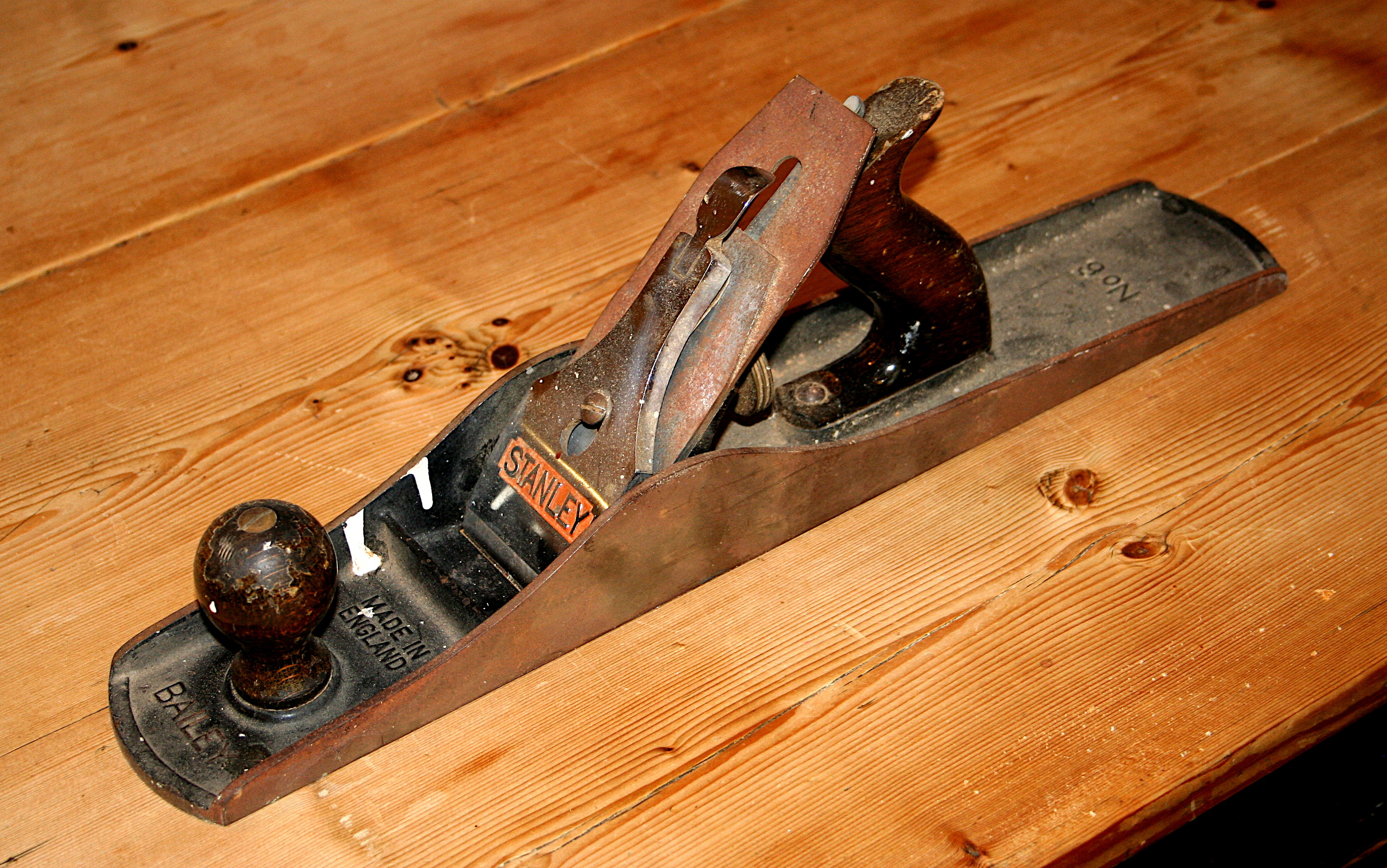
| Bench plane (No. 4 or No. 5) | Flattening and smoothing | A single mid-size plane handles most early work. |
| Bench chisels (1/4", 1/2", 3/4") | Paring and chopping waste | Three sizes cover most joinery cuts. |
| Backsaw or panel saw | Cutting to a line | A fine-tooth saw is more forgiving than a coarse one. |
Why sharpening comes first
Before any of these tools performs, its edge has to be keen. A dull chisel tears fibres and skips across the surface; a sharp one slices cleanly with light pressure. Most early frustration that beginners blame on technique is really a dull or poorly ground edge.
Reading a bevel
A typical bench chisel carries a primary bevel ground around the factory angle, with a small secondary bevel honed at the very tip. Keeping that tip polished is what matters day to day. You do not need to regrind the whole bevel often.
What to skip at the start
- Specialty planes such as shoulder, rabbet and router planes. Useful later, rarely needed in the first projects.
- Full chisel sets of ten or more sizes. Three working sizes do almost everything early on.
- Powered jointers and planers. A tuned hand plane teaches surface reading that machines hide.
A note on buying used in Canada
Older bench planes and chisels turn up regularly at estate sales and secondhand listings across the country. Vintage steel is often excellent. Check that a plane sole is not cracked, that the iron has enough length left to sharpen, and that chisel handles are sound. Surface rust is cosmetic and cleans up; pitting on the cutting edge is the real concern.